
Diesel generator fuel delivery to the site, on schedule.
Off-road dyed diesel delivered to jobsite, temporary and standby generators nationwide. Scheduled fills, monitored tanks, rental tanks that extend runtime — and a dispatcher who knows what fittings your set takes.
Get a generator fuel quote
Step 1 of 3Two quick questions, then your details.
What needs fuel?
Select all that apply — plenty of sites have a generator and a diesel tank.
Pick at least one — or choose “Not sure”.
How much fuel, and where?
A rough number of gallons is fine — but the number matters for pricing.
Add the estimated gallons plus street, city and ZIP.
Where should we send the quote?
Generator down right now? Call 800-720-4546 — dispatch is staffed 24/7
Keeping backup power fuelled for teams at






Generators rarely stop because of the engine
They stop because of what's in the tank, or how much of it is left. Three problems account for nearly every call-out we get — and all three are fuel-side, which means all three are avoidable with the right delivery program.
The tank ran lower than anyone thought
Night pours, extended shifts and a few test runs quietly draw a tank down. Without monitoring, the level is whatever someone last wrote on a clipboard — and it gets checked when the set won't start.
The fuel went off while it sat
Diesel starts degrading within months. Condensation puts water in the tank, microbial growth follows, and the result plugs filters exactly when the engine is asked to carry load. Stored fuel needs testing and sometimes polishing.
The delivery couldn't be completed
A truck reaches the gate and leaves again — wrong fitting, hose won't reach, no escort, locked compound, nobody on site. We confirm access and fill points before dispatch, because a failed drop costs a day.
Dyed diesel generator delivery — and when you need clear instead
Nearly every stationary generator in the country runs on off-road dyed diesel. Getting the distinction right matters, because one option is tax-exempt and the other isn't.
Off-road dyed diesel for generators
A generator bolted to a pad never touches a public road, so it doesn't owe highway tax. That makes off-road diesel delivery the correct and cheaper choice for standby sets, prime power, day tanks and sub-base tanks — the same red-dyed ULSD #2 we run to jobsites, just delivered to your generator instead.
Off-road diesel delivery Taxed · road-registered onlyClear on-road diesel
You only need clear diesel where the fuel could reach a highway-registered vehicle — a shared fill point, a service truck drawing from the same tank, or a towable set licensed for road use. If that's your situation, tell dispatch; running dyed fuel there is a tax violation, not a technicality.
On-road diesel delivery Low carbon · drop-inR99 renewable diesel
A drop-in replacement needing no engine modification, with substantially lower lifecycle carbon. It also stores better than petroleum diesel, which matters for a tank that sits between tests. Common for data centers and campuses reporting on emissions.
R99 renewable dieselPropane and natural gas generators. We also arrange propane supply, and coordinate around gas-fired sets that don't need liquid fuel but often sit alongside a diesel unit. If your site mixes fuel types, one account covers all of it — call dispatch and describe the setup.
How long will your tank actually last?
Consumption depends on the generator's kW rating and how hard it's working — not on tank size alone. Put your numbers in and you'll see the burn rate and the runtime you're really carrying.
Generator runtime calculator
These are planning estimates. Actual burn varies with engine, age, altitude and temperature — always check your generator's spec sheet before committing to a runtime figure for compliance.
What the number usually tells people
Two things surprise operators when they run this for the first time:
- A day-tank isn't a day. Sub-base tanks on larger sets are often sized for hours, not the multi-day outage people picture.
- Load matters more than size. The same generator at 25% versus 75% load changes your runtime by more than doubling the tank would.
- "Usable" is less than capacity. Pickup points sit above the tank floor, and you shouldn't run a tank down into its sediment.
Three generator refueling programs
Most sites end up on a mix — a keep-full program for the primary set, monitoring on the remote ones, and emergency generator refueling on file for everything.
Keep-full program
We agree a dyed diesel fill frequency from your test schedule and consumption history, then top the tank without you asking.
- Predictable cost and paperwork
- Fills logged for your records
- Best per-gallon pricing
Monitored tanks
A sensor reports the level to you and to us. Refills trigger on actual consumption instead of a calendar, and low levels raise an alert.
- No one climbs a tank to dip it
- Alerts before a level matters
- Consumption history per site
Emergency response
An account on file with your site details already confirmed, so a call during an outage becomes a dispatch instead of an onboarding.
- Site access recorded in advance
- 24/7/365 staffed dispatch
- Storm pre-positioning available
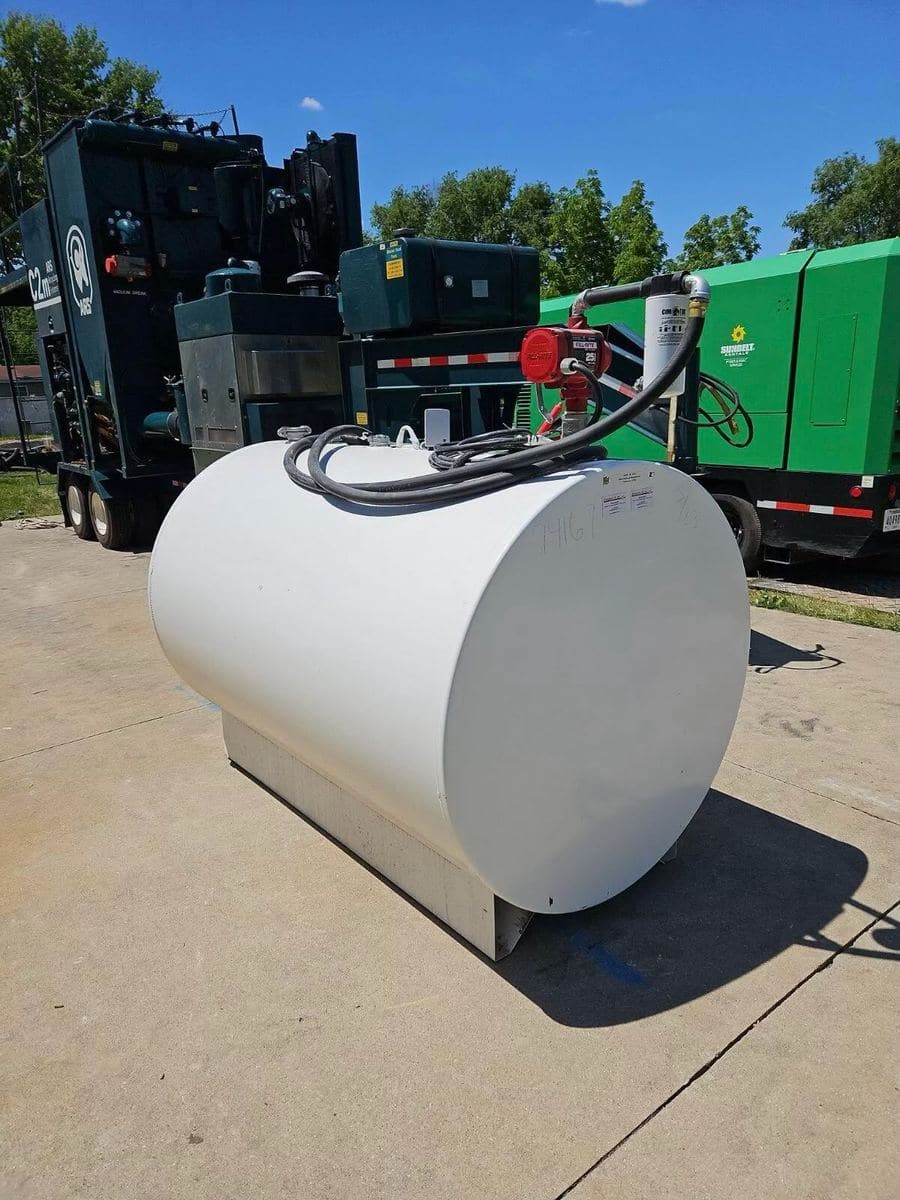
Rental tanks that plug straight into your generator
A sub-base tank buys you hours. If the job needs days — or the set is running prime power rather than standby — an auxiliary tank alongside it changes the delivery schedule completely. We rent the tank, plumb it in and keep it full on one invoice.
Generator fuel delivery for data centers
A data center doesn't have one generator, it has a farm of them — and a runtime figure it has committed to customers in writing. That makes fuel a capacity planning question, not a purchasing one. We work back from the runtime you've promised to the volume that has to be on site and the refill rate that sustains it.
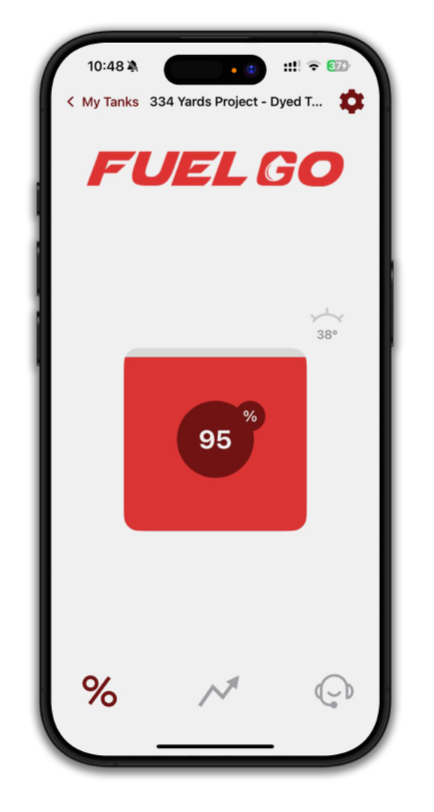
Know the level without sending anyone up a ladder
On monitored tanks you see the level on your phone, and so do we. For standby generators — which sit untouched for months — this is the difference between a number you trust and a number someone wrote down last quarter.
Diesel generator fuel delivery by industry
Every one of these runs generators for a different reason, on a different schedule, with different access. Pick yours to see how we handle it.
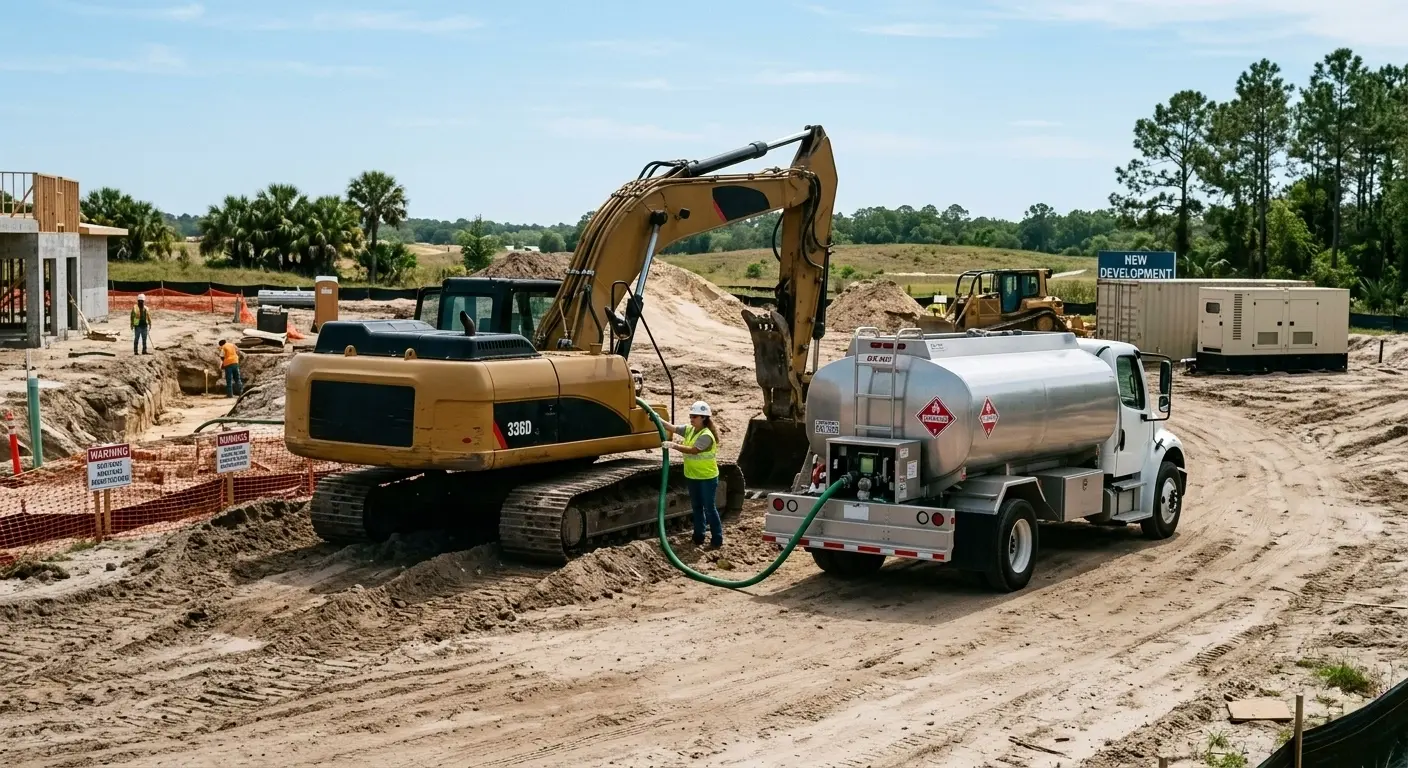
Construction
Temporary power, light towers, tower cranes and site trailers — fuelled on the same visit as your equipment, with rental tanks where there's nowhere to store fuel.

Data centers
Generator farms with runtime targets tied to uptime commitments, and R99 renewable diesel where carbon reporting matters.
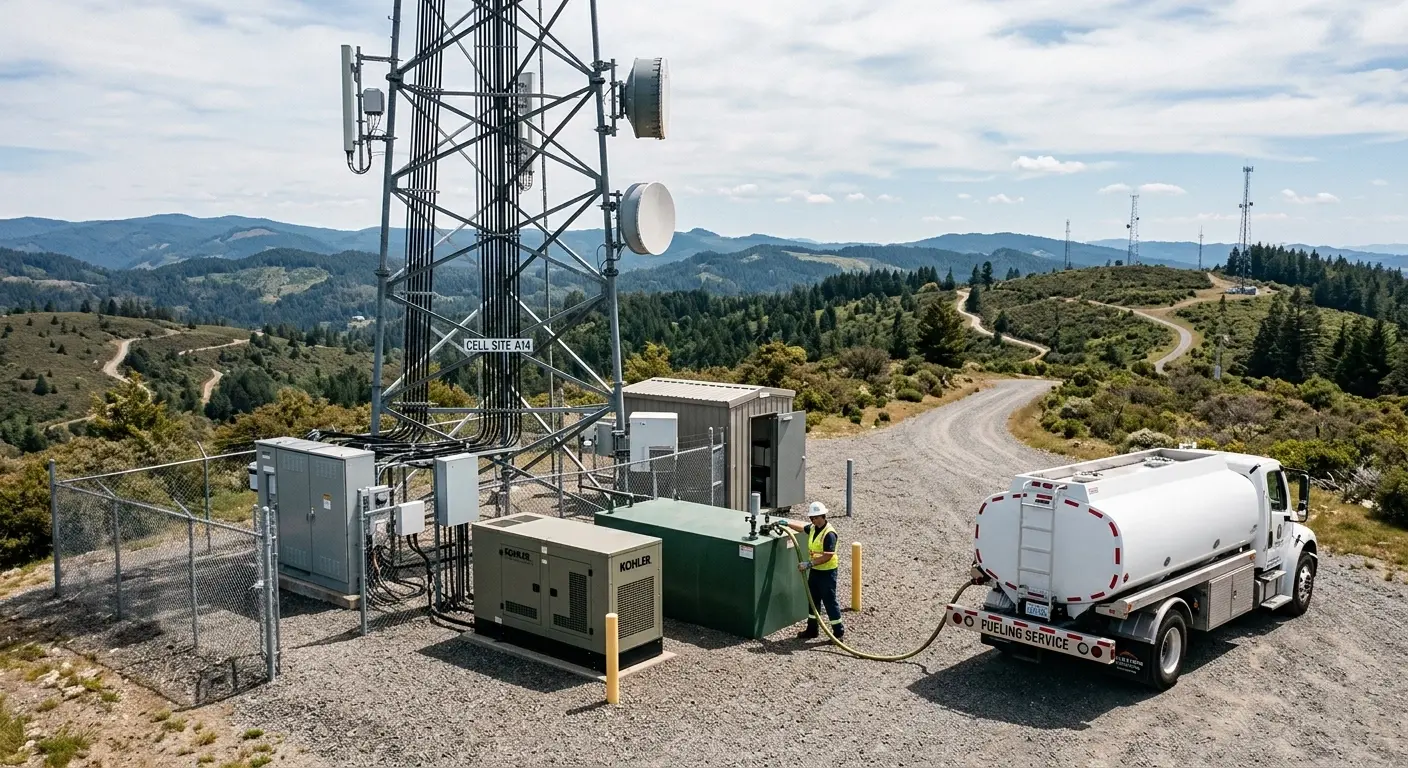
Telecom & towers
Whole networks of tower generators, with gate codes, escorts and fill levels confirmed before a truck is assigned.
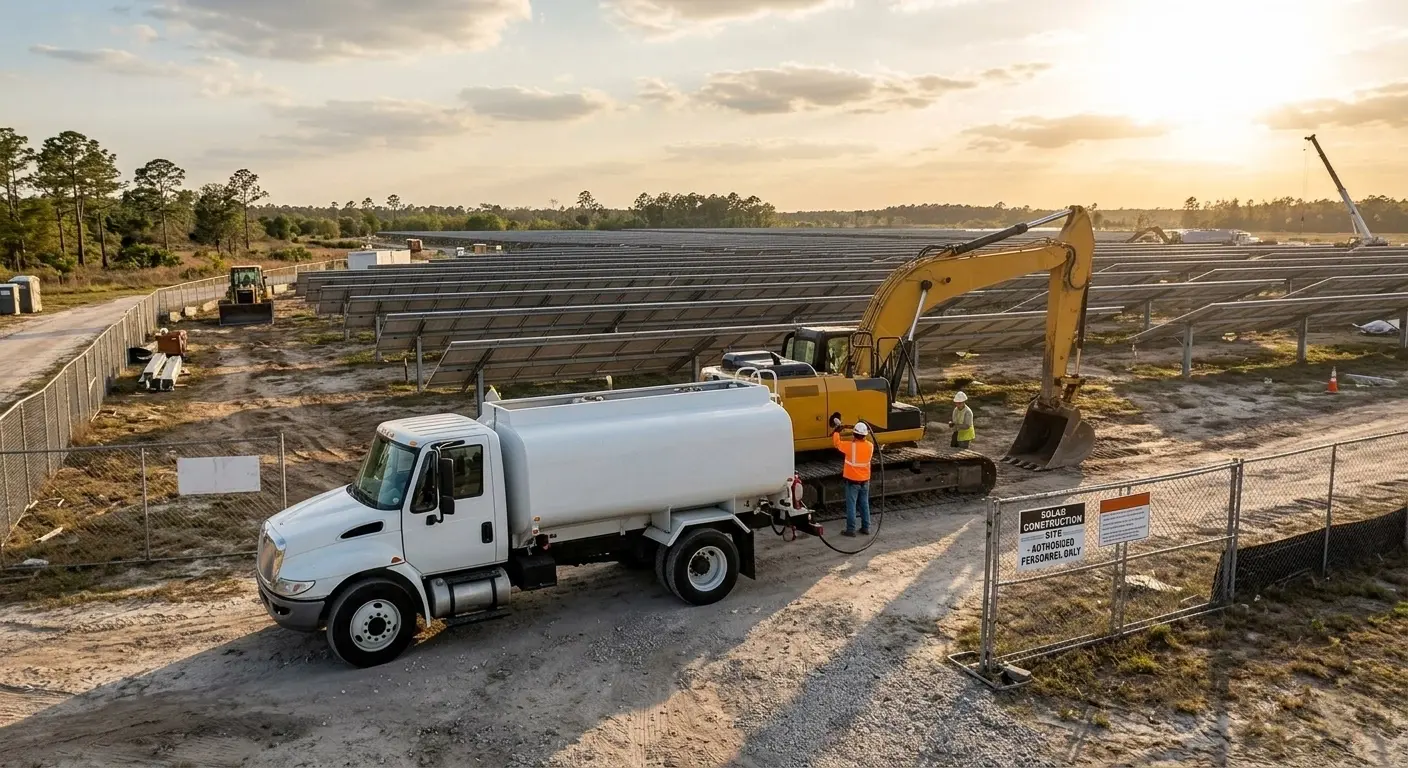
Solar & wind construction
Generator sets and pile drivers spread across a build site that can run for miles, often with no fixed address.

Government & military
Base generator farms and deployments, with high-volume drops, monitoring and the documentation procurement asks for.
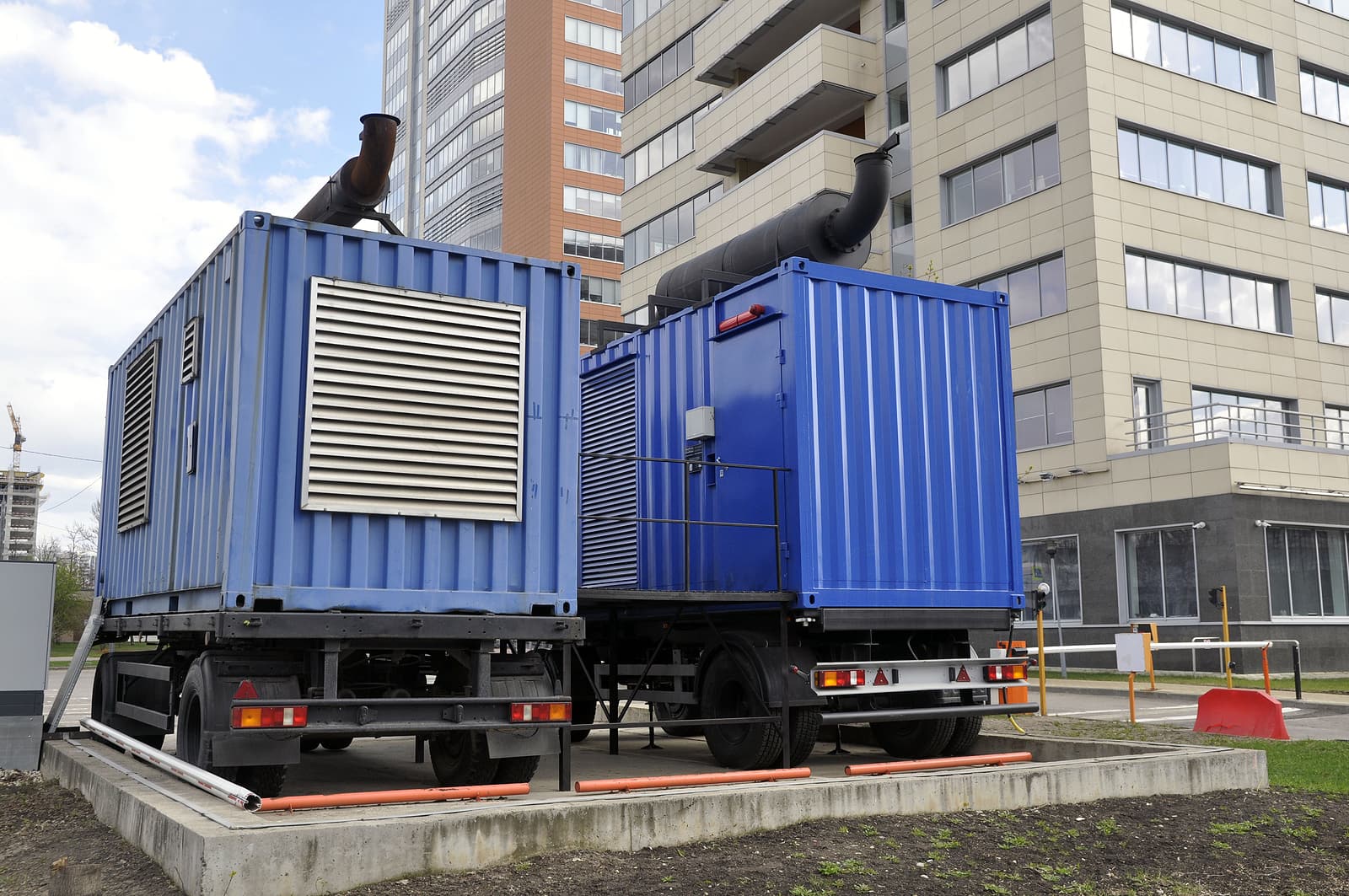
Cold storage & food processing
Backup power protecting refrigerated inventory, where an hour without a generator is written off as spoiled product.
Generator fuelling questions we answer daily
How much fuel does a generator use per hour?
Roughly 0.074 gallons per hour for every kW at full load, scaled down by how hard it's working. A 500 kW set at half load burns around 20 gal/hr; at full load closer to 37. The table above covers common sizes, and the calculator will do your specific numbers.
How often do generators need refuelling?
It depends entirely on burn rate versus usable tank volume. During a sustained outage a heavily loaded set can need daily fills, while a lightly loaded generator on a large tank may run for days. Monitored tanks remove the guesswork by triggering refills on actual consumption.
What fuel do commercial generators run on?
Most standby and prime sets run on diesel — usually off-road (dyed) diesel, since a stationary generator never touches a public road and so is tax-exempt. We also supply clear diesel, propane, natural gas arrangements and R99 renewable diesel for facilities with carbon targets.
Does diesel go bad sitting in a generator tank?
Yes. Diesel begins degrading within months, and condensation introduces water, which allows microbial growth. The result blocks filters under load — which is when you find out. Stored fuel should be tested periodically and polished when needed.
Do you rent tanks that attach to a generator?
Yes — day tanks, auxiliary tanks, skid tanks and towable tanks, sized to the runtime you need and plumbed to feed the generator's own tank. Rental and refills go on one invoice with your equipment fuel. See fuel tank rentals.
Can I use off-road dyed diesel in my generator?
Yes — and for a stationary generator you generally should. Because the fuel never reaches a public road, it's exempt from highway tax, which makes off-road diesel delivery both legal and cheaper per gallon. The exception is a shared fill point or a road-registered towable set, where clear diesel is required.
What's the difference between dyed diesel and clear diesel for generators?
None mechanically — both are ULSD #2 and burn identically. The red dye is a tax marker showing highway tax wasn't paid. Dyed diesel is for off-highway use like generators and jobsite equipment; clear diesel is for road-registered vehicles. We deliver both and invoice them as separate line items so your tax treatment stays clean.
Can you refuel during a power outage or storm?
Yes — emergency response is core work, and we've fuelled into declared disaster areas alongside agencies including FEMA. Accounts already on file with confirmed site details get dispatched first, which is the single best reason to set one up before hurricane season rather than during it.
Do you supply fuel for monthly generator testing?
Yes. Test runs and load-bank testing consume real volume, and they're the most commonly forgotten draw on a standby tank. We can fold testing into a scheduled program so the tank returns to full afterwards.
Can you fuel rooftop or hard-to-reach generators?
Yes — rooftop sets, basement rooms, gated compounds and remote tower sites are routine. Access, hose reach and fill-point specifics get confirmed before a truck is assigned, which is what prevents a wasted trip.
Is there a minimum order?
No. We deliver anything from a single generator top-off to multi-thousand-gallon fills. Cost per gallon improves with drop size, so we'll tell you if consolidating sites or fills would save money.
Set up generator fuel delivery before you need it.
Quotes in the same hour. Dispatch around the clock, 365 days a year.